One Live Room
One Live Room

Steinway Recording Studio in the Hudson Valley
Three instruments, three voices — six acres of woods in Upstate New York.
One Soul Studios houses three Steinway grand pianos under one roof, each with a distinct tonal character, all kept in recording condition year-round. The studio sits in New Baltimore, NY, on a wooded six-acre property in the Hudson Valley — 2.5 hours from New York City, 2.5 hours from Boston, 30 minutes from Albany International Airport.
Every instrument is maintained exclusively for recording. A dedicated piano technician is on call for tuning, voicing, and regulation. Onsite lodging is available for multi-day sessions.
The Three Instruments
2005 Hamburg Steinway D
This concert grand served as the principal instrument in Lausanne, Switzerland before arriving at the studio. Radu Lupu, Martha Argerich, and Hélène Grimaud are among the pianists who have played it. The tonal palette is wide, the sustain is deep, and the dynamic range covers everything from the softest pianissimo to full concert-level projection.
1904 New York Steinway B
A product of the Queens factory during its most celebrated era. The tone is warm, dark, and harmonically rich — the kind of sound associated with the recordings of Bill Evans. For jazz and close-mic work, this is the instrument that fits.
1883 Centennial Steinway D
One of the rarest Steinways in existence. Built between 1875 and 1884, it was part of the series created to represent Steinway & Sons at the 1876 Philadelphia World’s Fair. Fully rebuilt for this studio, it carries a “period” character suited to the music of Couperin and Scarlatti.
An appointment can be made in advance to play all three and choose before the session begins.
The Live Room
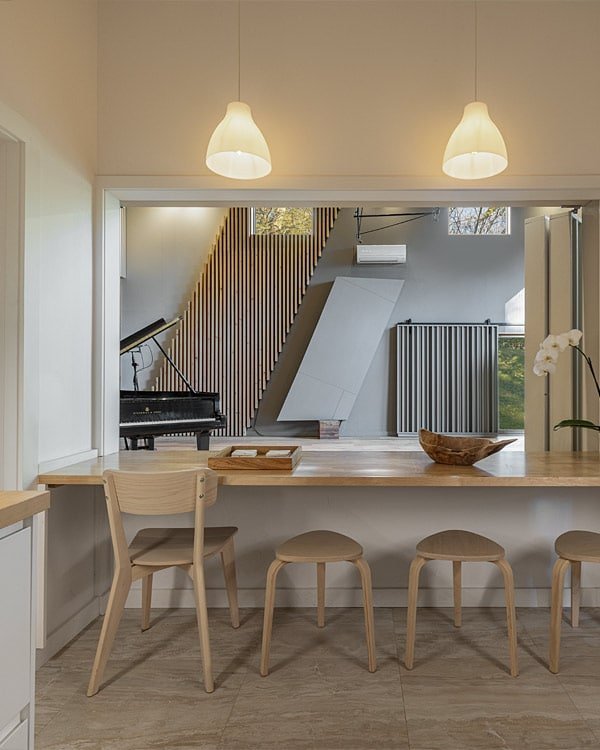
The main tracking room covers 32 by 24 feet with a ceiling that rises to 22 feet at the apex. The acoustic treatment includes Quadratic Residue Diffusers, Helmholtz absorbers, and acoustic polarization. The room’s decay sits at approximately 0.8 seconds — enough bloom to support the natural resonance of a Steinway, enough control to keep detail intact.
Three isolation booths are connected to the main room, providing separation for ensemble work without losing visual contact between musicians. A variable acoustic system makes it possible to adjust how wet or dry the room sounds for each project. The environment is climate-controlled throughout the year, keeping all three instruments stable regardless of season.
A Residential Facility in the Hudson Valley
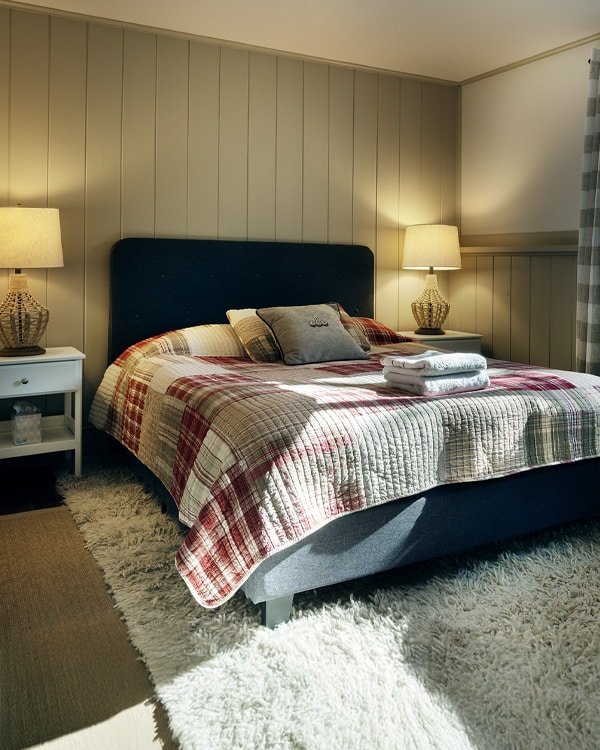
The studio operates as a residential facility. Three bedrooms — two with queen beds, one with a full — plus a private kitchen are available for artists working on multi-day sessions. The setup is designed so the creative process does not have to stop between takes.
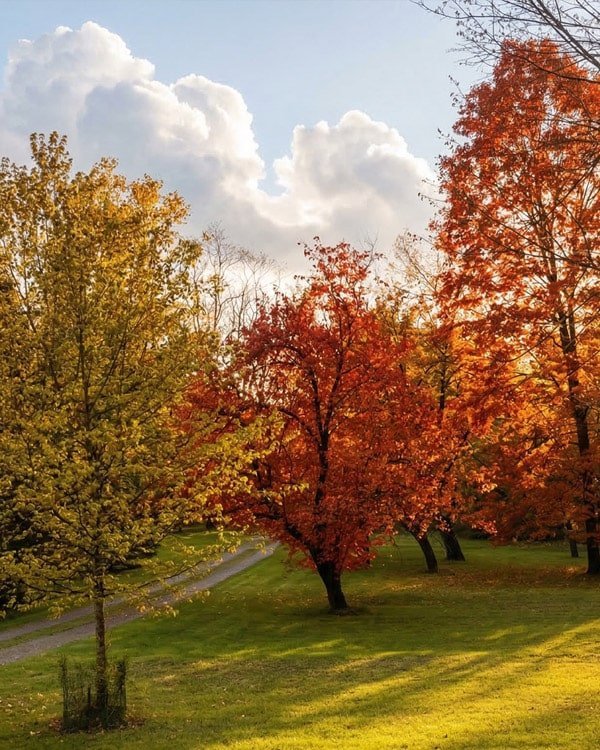
The property borders the New Baltimore Conservancy and the Scenic Hudson Land Trust. The Hudson River runs along the north edge, with a kayak launch five minutes away on foot. Protected hiking trails begin one mile east. Strong work often happens outside the tracking room — the space between sessions is part of the process.
Location and Access
The studio is located at 853 Route 144, New Baltimore, NY 12124, between Albany and Hudson, directly along the river.
- New York City — 2.5 hours by car
- Boston — 2.5 hours by car
- Albany International Airport — 30 minutes
What Artists Say
Frequently asked questions
What makes the three Steinways different?
Each piano comes from a different factory, era, and acoustic tradition. The Hamburg D is the modern concert instrument — wide dynamic range, full projection, transparent tone. The 1904 New York B is warm and dark-voiced, closely associated with Bill Evans. The 1883 Centennial D is a rare historical instrument suited to early keyboard repertoire. The choice depends on the project, the repertoire, and the player’s preference.
Can two pianos be used in the same session?
Yes. Two of the three Steinways can be tuned to each other for four-hand work across two instruments.
How do I choose my piano before the session?
An appointment can be arranged in advance to play all three and make a selection before the recording date.
What does the tracking room sound like?
The main room measures 32 by 24 feet with a 22-foot vaulted ceiling. The decay time is approximately 0.8 seconds. Acoustic treatment — diffusers, absorbers, and polarization — keeps frequencies balanced and defined. A variable system allows the room to be adjusted wetter or dryer depending on the project.
Is a piano technician available during sessions?
Yes. Bobby Avey is the studio’s dedicated technician, handling tuning, voicing, and regulation before and during the work.